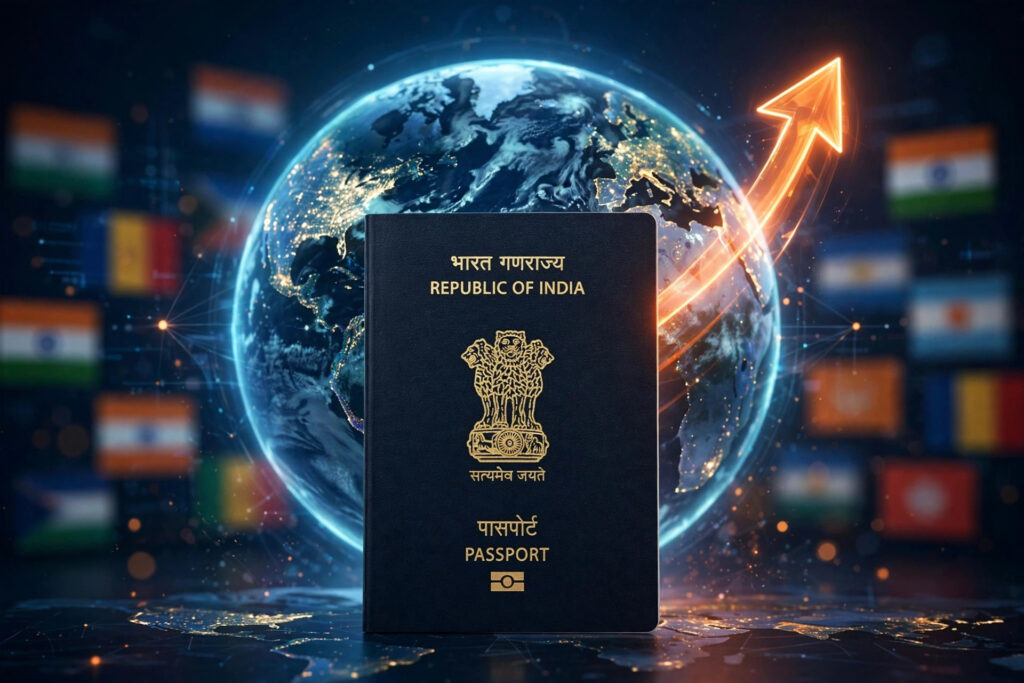
Every Indian who dreams of travelling abroad eventually asks the same question: how strong is my passport? News headlines often celebrate improvements in the Indian passport ranking, but what does that ranking actually measure — and what does it mean for your next trip? This guide explains the Henley Passport Index methodology, what visa-free access really means for Indian travellers, which destinations are popular, and how to verify entry rules before you fly.
What Is the Indian Passport Ranking and How Does It Work?
The most widely cited measure of passport strength is the Henley Passport Index, which ranks the world's passports based on how many destinations their citizens can enter without a pre-arranged visa — that is, visa-free or with a visa on arrival. The index draws its data from official sources such as the International Air Transport Association (IATA), and it is updated periodically as countries change their entry rules.
A few things to understand about the methodology:
- The ranking counts destinations, not the "quality" of the passport itself — it is a measure of travel freedom.
- Different agencies use different counting methods, so ranks and numbers can vary between indexes. No single number should be treated as the final truth.
- The Indian passport ranking moves up and down over time as bilateral visa agreements change — treat any figure you see as a snapshot, not a permanent fact.
- For the latest official edition, check the Henley Passport Index directly at henleyglobal.com rather than relying on headlines.
What the Indian Passport Ranking Means for Travellers
When India's position in the Indian passport ranking improves, it signals that more countries have opened their doors a little wider to Indian travellers. The practical benefits are real:
- Less paperwork: for many destinations, there is no need to apply for a visa in advance
- Lower costs: visa fees and agent charges are saved on visa-free routes
- Spontaneous travel: a suddenly planned trip becomes genuinely possible
- Easier business trips: short work visits can be arranged quickly
But it is important to understand what "visa-free" does not mean. It does not mean "entry without conditions." Every country sets its own requirements — such as minimum passport validity, a return or onward ticket, and proof of sufficient funds. Immigration officers can and do ask for these documents at the border.
Popular Visa-Friendly Destinations for Indian Passport Holders
Indian travellers commonly use visa-free or visa-on-arrival routes to reach some of the world's most loved destinations. Below is an indicative list — entry rules change frequently, so always verify on the destination country's embassy or official immigration website before booking:
| Destination | Usual entry mode for Indians |
| Nepal, Bhutan | Entry on valid ID, no visa needed |
| Thailand | Visa-free stay for a fixed period |
| Malaysia | Visa-free for a fixed period |
| Maldives | Visa on arrival |
| Mauritius | Visa-free or visa on arrival |
| Qatar | Visa-free for a fixed period |
| Indonesia (Bali) | Visa on arrival / e-VOA |
| Sri Lanka | ETA or visa on arrival |
| Fiji | Visa-free |
| Kazakhstan | Visa-free for a fixed period |
Note: this list is indicative only. Visa rules change often — stay limits and conditions are revised without much notice. Always confirm the latest entry requirements from official sources before you travel. For general trip-planning advice, browse our travel tips.
How to Make the Most of Your Passport's Mobility
Passport strength is decided at the country level, but as an individual traveller you can build a strong travel profile:
- 1. Start with visa-friendly destinations — a good travel history helps future visa applications.
- 2. Never overstay a visa — one overstay can damage many future applications.
- 3. Keep your documents in order — return tickets, hotel bookings, and proof of funds matter at every border.
- 4. Buy travel insurance — it is mandatory in several countries and a lifesaver in emergencies.
- 5. Watch for rule changes — visa policies are revised several times a year.
With good planning, Indian travellers can comfortably explore many beautiful countries. If you need help planning, our Sunlight blog covers destinations, visas, and travel processes in detail.
Frequently Asked Questions
Q1. What is the current Indian passport ranking?
Rankings change with every update of the Henley Passport Index. Check the latest edition on the official Henley Passport Index website rather than relying on older headlines.
Q2. Does "visa-free" mean I can enter without any documents?
No. Visa-free only means you do not need to obtain a visa in advance. Documents like passport validity, a return ticket, and proof of funds can still be demanded.
Q3. Which are the easiest visa-free countries for Indians?
Nepal, Bhutan, Thailand, Malaysia, Maldives, and Mauritius are among the most popular visa-friendly destinations for Indians. Rules change often, so verify before you travel.
Q4. Does a better passport ranking guarantee my visa approval?
No. The ranking reflects the country's overall position; every individual's visa depends on their own documents and profile. No one can guarantee a visa approval.
Q5. Do different passport indexes show different ranks?
Yes. Agencies use different methodologies and counting rules, so ranks and destination counts can differ between indexes. Always treat published figures as approximate.
WhatsApp Sunlight Holidays at +91 9720344939 for free guidance on visas, tour packages, and travel planning. Our consultation/application fee is ₹799 (non-refundable, charged after the work begins).
Disclaimer: Sunlight Holidays is a travel consultancy — not a government, embassy, or immigration department. Visa approval, fees, processing time, and the final decision rest with the issuing authorities. Please verify the latest information on official embassy and government websites before making your final decision.