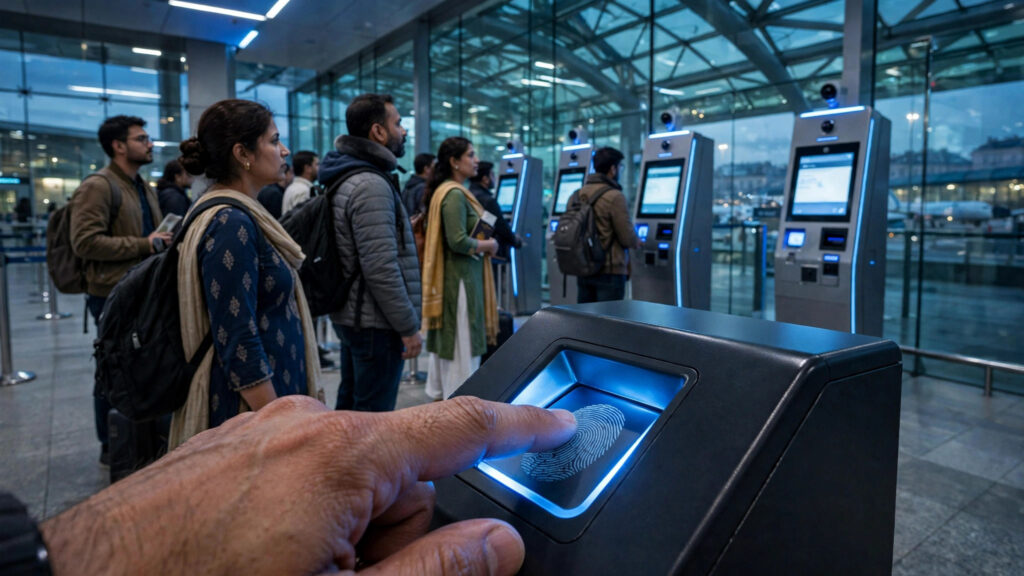
The passport stamp is gone. Since the EU’s Entry/Exit System (EES) became fully operational, Indian travellers entering Europe now pass through a biometric entry system — fingerprints and facial scans replace ink stamps at every Schengen border. If you are flying to Europe this autumn or winter, the first immigration counter you meet will look very different from your last trip. Here is what the EES biometric entry rules mean for Indians.
Published: 3 October 2026.
What Is the EES?
The Entry/Exit System is the EU’s digital border management platform for non-EU nationals visiting the Schengen Area for short stays (up to 90 days in any 180-day period). Instead of stamping passports, border authorities electronically record each traveller’s entry and exit, linked to biometric data.
The system collects:
- Passport details and travel document information
- Date, time and place of entry and exit
- Fingerprints and a facial image
- Records of any refused entry
The EES applies across 29 European countries in the Schengen Area, and covers all non-EU short-stay visitors — including Indian passport holders, as well as travellers from the US, UK, Canada and Australia. EU citizens, long-term residents and holders of long-stay national visas are not part of the system.
Why This Matters Now: The EES Is Fully Live
The EES began a phased rollout on 12 October 2025 and became fully operational on 10 April 2026 — manual passport stamping for non-EU nationals ended that day. According to reports citing the European Commission, the system has already registered tens of millions of border crossings and is now flagging overstays automatically. This is not a future change — it is the current reality at every Schengen airport, seaport and land crossing.
What Happens at the Border: Step by Step
On your first entry under the EES (or your first entry since the system went live), expect a longer process:
- Passport scan at a biometric kiosk or manned desk
- Fingerprints collected (adults; children under 12 give a photo but are exempt from fingerprinting)
- Facial image captured and linked to your passport
- Digital entry record created — no stamp in your passport
- Possible document checks — officers may still ask for hotel bookings, return tickets or proof of funds
Industry groups have warned of queues stretching up to two to three hours at busy airports during first enrolment, especially at peak times. On later trips, stored biometrics are matched automatically and you may be able to use e-gates.
Old Stamps vs the EES: A Quick Comparison
| Old system | EES biometric entry |
|---|---|
| Ink stamp in passport on entry/exit | Digital record linked to passport — no stamp |
| Stay length checked manually | 90/180-day rule tracked automatically |
| Overstay spotted at random | Overstay flagged in real time, even by one day |
| No shared traveller history | Entry/exit history visible at every Schengen border |
The 90/180-Day Rule Is Now Enforced Automatically
This is the single biggest practical change. The EES calculates your remaining allowed days under the 90/180-day rule every time you cross a border. Even one extra day can now be flagged instantly — potentially leading to fines or restrictions on future travel.
ETIAS: The Next Change Is Still Coming
Alongside the EES, the EU is preparing the European Travel Information and Authorisation System (ETIAS) — a paid online authorisation for visa-exempt travellers, expected to follow the EES. The European Commission has proposed raising the fee from €7 to €20. Indians travelling on a Schengen visa are not visa-exempt travellers, but rising costs are worth budgeting for. Always verify the latest status on the EU’s official travel website before planning.
5 Practical Tips for Indian Travellers
- Reach the airport earlier: arrive at least 3 hours before departure, and budget extra time at your European destination’s immigration on arrival.
- Use pre-registration: the Frontex “Travel to Europe” app lets non-EU travellers pre-register passport data and a facial image up to 72 hours before arrival — use it.
- Keep documents handy: return tickets, hotel bookings and travel insurance can still be asked for at the border.
- Track your Schengen days: if you make multiple Europe trips, count every day — the system now does it for you.
Travellers comparing rules across countries may also want to read our nine-country visa rule changes breakdown and the Australia tourist visa (subclass 600) guide.
Frequently Asked Questions
Do Indians need a Schengen visa after the EES launch?
Yes. The EES changes how borders are checked, not who needs a visa. Indian passport holders still need a valid Schengen visa before travelling.
Will my fingerprints be taken every time I enter Europe?
No. Full biometric enrolment happens on your first entry; later trips use stored data for quicker verification.
Are children fingerprinted at European borders?
Children under 12 must provide a photo but are exempt from fingerprinting.
Does the EES mean longer queues at European airports?
Initially, yes — especially on first enrolment. Industry groups have warned of waits of up to two to three hours at peak times. Later trips are generally faster.
What happens if I overstay my Schengen visa by one day?
The system now records exits digitally and flags overstays automatically, which can affect future visa decisions. Keep your stay within the 90/180-day limit.
📞 **Sunlight Holidays se baat karein**
Visa, tour package ya videsh job se judi kisi bhi jaankari ke liye WhatsApp karein: **9720 3449 39**
💰 *Payment After Reach model — bhaari advance nahi, pehle bharosa.*
📝 Consultation/Application fee: ₹799 (non-refundable, kaam shuru hone ke baad)
⚠️ **Disclaimer:** Sunlight Holidays ek travel consultancy hai — hum sarkar, embassy ya immigration department nahi hain. Visa approval, fees, processing time aur final faisla sambandhit embassy/sarkari authority ka hota hai. Kripya antim nirnay se pehle official embassy/government website se latest jaankari verify zaroor karein.
Sources: News18 — https://www.news18.com/lifestyle/travel/schengens-new-entry-exit-system-goes-live-what-indian-travellers-need-to-know-10029697.html ; Business Today — https://www.businesstoday.in/nri/visa/story/travelling-to-europe-what-travellers-need-to-know-about-the-new-entryexit-system-524967-2026-04-10 ; Outlook Traveller — https://www.outlooktraveller.com/News/schengens-new-entry-rules-what-travellers-need-to-know-about-ees-and-etias ; VisaVerge — https://www.visaverge.com/news/european-union-suspends-passport-stamps-for-indian-travellers-from-april-10/ ; Open Magazine — https://openthemagazine.com/world/eu-fingerprint-rule-what-indian-travellers-must-know-before-visiting-europe ; The Economic Times — https://economictimes.indiatimes.com/nri/visit/europe-trip-to-cost-more-for-some-as-eu-triples-digital-entry-fee/articleshow/122829029.cms