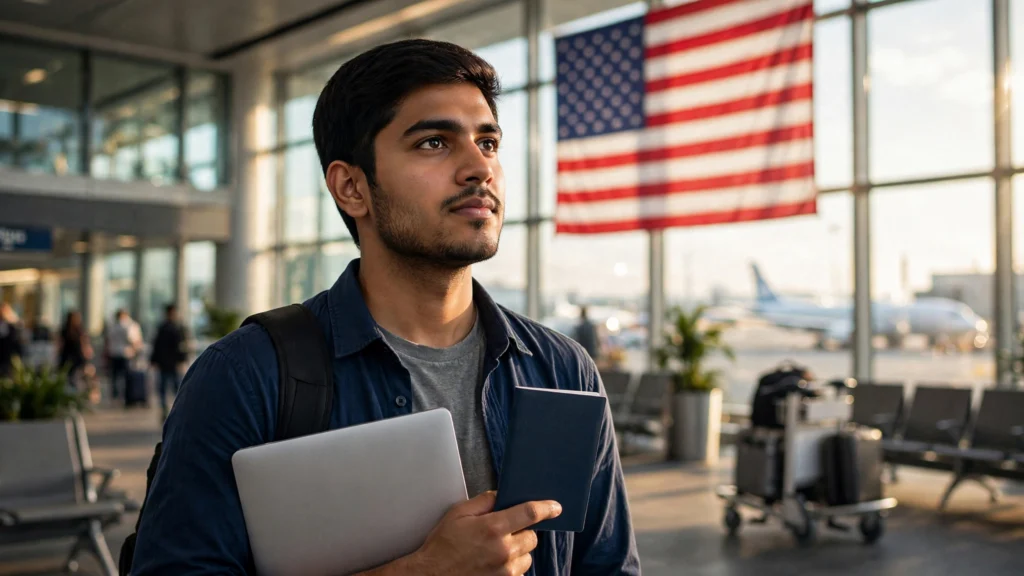
The United States has extended its controversial $100,000 H-1B fee requirement through 21 September 2027 — but there is a critical twist: as of late September 2026, a federal court order means the fee is not being collected. If you are an Indian professional watching H-1B developments, here is the complete, up-to-date picture.
Indians receive the majority of H-1B visas issued each year, so every policy shift in Washington is felt directly by Indian IT professionals, engineers and their families. Here is what has actually happened — separating fact from headline.
What actually happened
A US presidential proclamation first introduced a $100,000 fee requirement for certain new H-1B petitions. A follow-up proclamation in September 2026 extended the restriction through 21 September 2027. On paper, that sounds alarming for Indian workers.
However, the policy was challenged in court — and the challengers won the critical early rounds. A federal court blocked the fee, and on 24 July 2026 the US Court of Appeals for the First Circuit refused to stay that order. According to immigration reports published in September 2026, the $100,000 fee is currently not being collected.
Why this matters
In plain language, the current position is:
- The extension exists on paper — the proclamation formally keeps the policy alive through 21 September 2027.
- The courts have blocked it for now — while the court order stands, employers are not paying the $100,000 fee.
- The situation can still change — court decisions can be appealed and policy can shift. Treat this as a developing story, not a settled one.
Who the policy is aimed at
The fee requirement targets new cap-subject H-1B petitions filed from outside the United States — in practice, the route many Indian IT professionals use to begin working in the US. It does not apply to every H-1B case: reports indicate that renewals and workers already in the US were not the primary target. The exact scope has been disputed, so always check the latest official guidance from USCIS (US Citizenship and Immigration Services) rather than relying on summaries.
Key dates to remember
- September 2025: the original $100,000 H-1B fee proclamation was issued.
- 24 July 2026: the First Circuit declined to stay the court order blocking the fee.
- September 2026: a new proclamation extended the restriction through 21 September 2027.
- September 2026: DHS published a proposed rule to eliminate the 60-day grace period for laid-off H-1B workers — a proposal only, not a final rule.
The 60-day grace period: a proposal, not a law
You may have seen alarming headlines claiming the 60-day grace period for laid-off H-1B workers “has been removed.” That is not accurate. In September 2026, the Department of Homeland Security proposed eliminating the grace period. A proposed rule goes through public comment and review before it can become final — and it may never become final. Do not make life decisions based on a proposal. The final decision on US immigration policy rests with the US authorities.
What should Indian workers do now?
- Follow official sources only: USCIS.gov and the Federal Register are the authorities. Ignore WhatsApp forwards and sensational headlines.
- Keep your documents ready: passport, degree certificates, experience letters and pay records — updated and in one place.
- Talk to your employer early: if your company plans to file an H-1B petition for you, ask about their current filing strategy in light of the court order.
- Maintain legal status: never let your current visa status lapse while waiting for policy clarity.
- Plan for uncertainty: keep backup options in mind rather than depending on a single filing window.
Alternatives worth knowing about
The H-1B is not the only US work route. Depending on your profile, other categories may exist — for example, intra-company transfer routes for employees of multinational companies, or categories for individuals with extraordinary ability. Eligibility rules are strict and highly individual, so get professional advice rather than assuming any route fits you.
Common mistakes to avoid
- Believing anyone who “guarantees” an H-1B approval — no agent or consultant can decide your case; only the US authorities decide.
- Paying large sums for “fee waivers” or “guaranteed slots” — official fees go through official channels only.
- Treating proposals as final rules — always check whether a change is proposed, in litigation, or actually in force.
- Letting your current status lapse while waiting for clarity on a future filing.
Frequently asked questions
Is the $100,000 fee being collected right now? As of late September 2026, no — a federal court order blocks it, and the First Circuit refused to lift that block in July 2026.
Does the extension to September 2027 change that? The extension keeps the policy formally alive, but the court order still prevents collection while it stands.
Does the fee apply to H-1B renewals? The policy was aimed at new cap-subject petitions from outside the US. Check current USCIS guidance for the exact scope.
Has the 60-day grace period been removed? No. Its elimination is only a DHS proposal at this stage.
What about H-4 dependents? Dependent rules follow the principal worker’s status. Confirm the current position on the official USCIS website.
A note from Sunlight Holidays
US immigration policy is moving fast, and headlines often run ahead of the facts. We track official developments so you don’t have to act on rumours. For job and work-permit cases, our policy is Payment After Visa — our service fee comes only after your visa is granted. The final decision on any US visa always rests with the US authorities.